Self-Hosted Edition
Run theDavid in your own cloud.
For organizations with data sovereignty, compliance, or scale needs that go beyond a managed plan. Same CMS, your infrastructure, your perimeter.
When self-hosting fits
Four reasons organizations move theDavid in-house.
Most clients are happy on the managed plan. These four reasons are when the math (or the audit) flips toward owning the infrastructure.
- 01
Data sovereignty
Your customer data, your editorial content, your search index — all live in your AWS, GCP, or Azure account. Nothing leaves your perimeter.
- 02
Compliance environments
HIPAA, SOC 2, FedRAMP, region-restricted GDPR. We've shipped theDavid into compliance-bound environments before — we know the shape of the audit and the controls it expects.
- 03
Cost economics at scale
Above 500K monthly visitors or 50GB of media, dedicated infrastructure with reserved instances usually costs less than a managed multi-tenant tier. The break-even is between Scale and Enterprise.
- 04
Full control of the stack
Your DevOps team owns the deployment pipeline. You pick the region, the instance class, the backup cadence, the observability stack. We hand you the keys.
The product, not a pitch deck
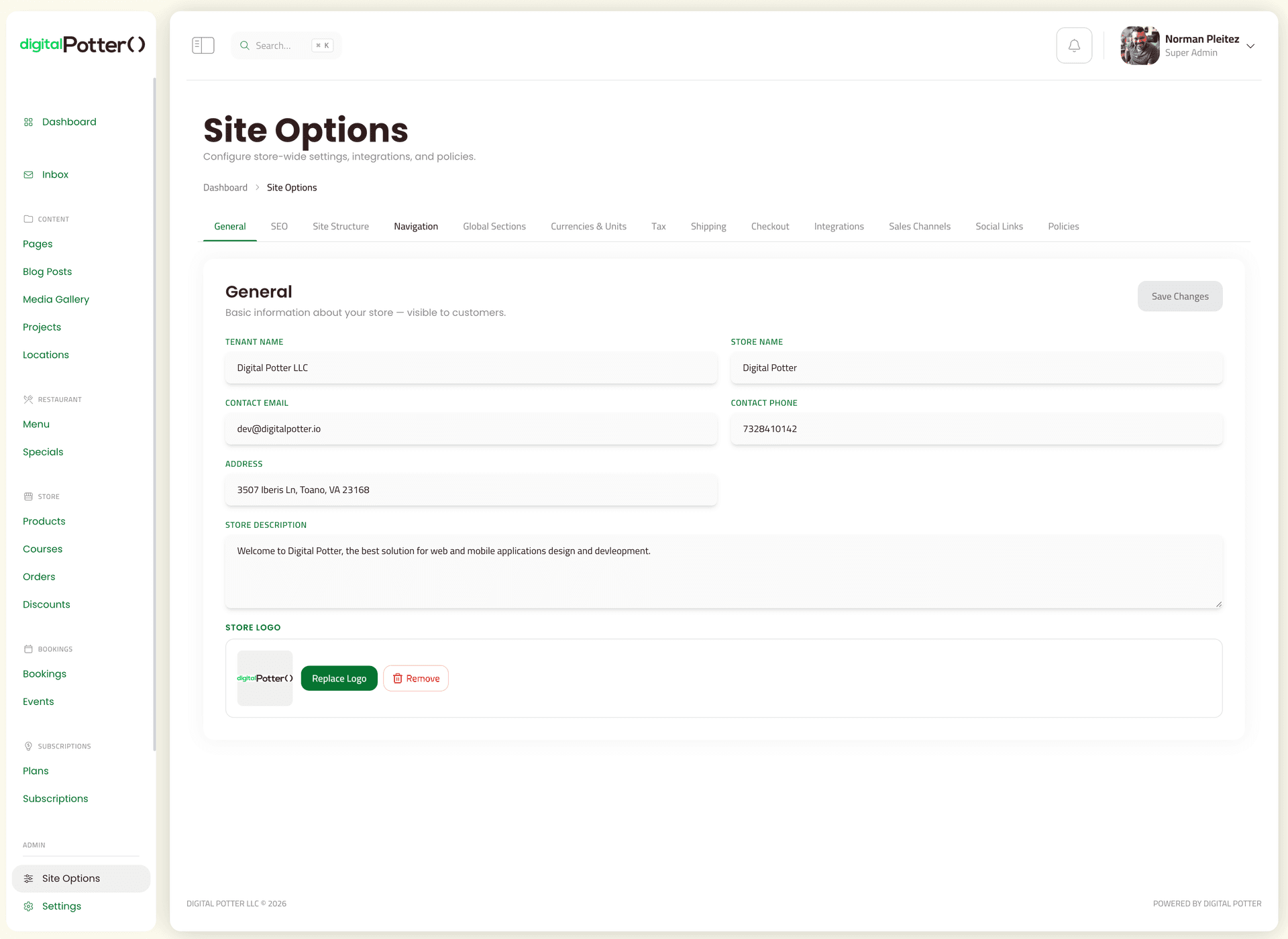
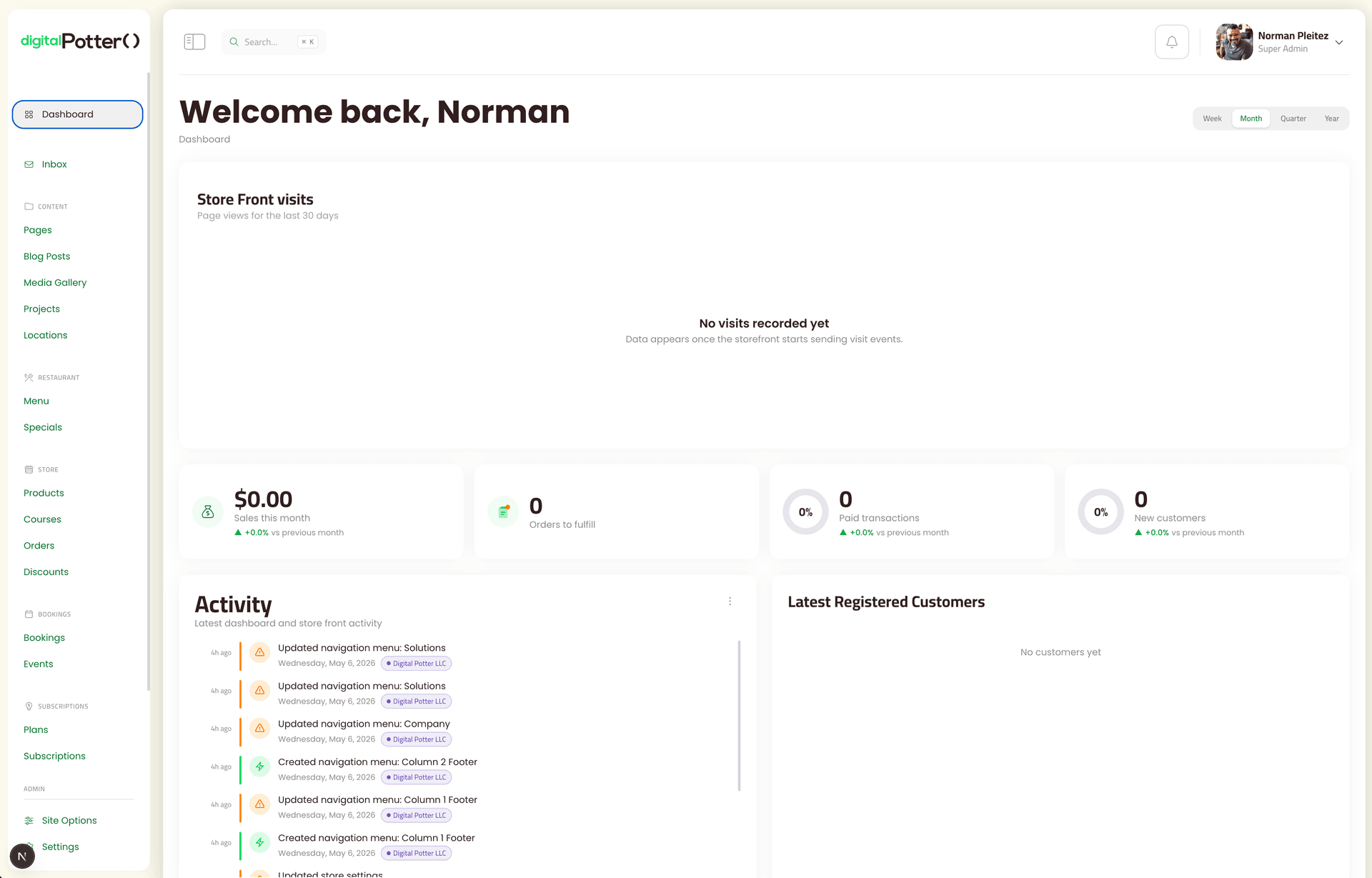
This is what your team gets the keys to.
The same theDavid that powers our managed clients — running in your cloud, under your keys, with your audit trail.
What you get
Three deliverables. One running platform. Your perimeter.
An end-to-end engagement that ends with your team running theDavid independently — with us on speed-dial when you want backup.
01 — License & setup
A perpetual license to run theDavid in your org.
We provision the initial environment in your AWS, GCP, or Azure account (or on-prem) and wire up the database, object storage, email transport, and observability stack.
- Source code delivered to your private repository
- Initial production environment provisioned and tested
- Database (MongoDB), object storage, email transport configured
- Observability stack: logs, metrics, alerts on day one
02 — Environment provisioning
Production, staging, and dev — Infrastructure-as-Code.
Three environments configured from kickoff. Terraform or CloudFormation (your team picks) so you can rebuild from scratch any time.
- Three environments: prod, staging, dev
- Infrastructure-as-Code in your repo
- CI/CD pipeline integrated with your existing tooling
- Disaster-recovery runbook with tested failover
03 — Training for your team
Two-week onboarding for your platform engineers.
Walk-through of the codebase, deployment flow, scaling levers, and incident response. We document the gotchas before we hand over the keys.
- Codebase and architecture deep-dive (recorded)
- Deployment and rollback walkthroughs
- Scaling levers and observability dashboards
- Incident response and on-call runbook
After we hand over the keys
Two paths for ongoing operations.
Most orgs choose the maintenance contract for the steady upgrade cadence. Some prefer to run it themselves and just call us when they need help.
Path A — Recommended
Maintenance contract
We continue to ship security patches, dependency updates, and feature releases under an SLA. Your team focuses on your business; we keep the platform current.
- Quarterly version upgrades with regression testing
- Security patches within 72 hours of upstream release
- Feature releases — every theDavid release applies to your fork
- Priority support and incident response (4h business-hours SLA)
- Dedicated Slack channel with our platform engineers
Path B
DIY operations
You run it. We're available as a paid consultant when you need help, but the day-to-day is fully yours. Best for orgs with established DevOps capacity who'd rather own the platform end to end.
- Full source code and architecture documentation in your hands
- Your team owns deployments, patching, and incident response
- Pay-as-you-go consulting at our standard hourly rate
- Optional annual review and roadmap sync
License & IP terms
The legal bit, in plain English.
Five things to know before the formal agreement. The full license is short and we're happy to walk through it on a call.
Single-organization license
You receive a perpetual license to run theDavid inside your organization. No seat counts, no per-deployment fees.
No redistribution
You may not redistribute, sublicense, or replicate the codebase outside your org. Internal modifications and forks are fine — they just stay internal.
You own your data and your modifications
Whatever your team builds on top of theDavid is yours. The platform code is licensed; your customizations and content are not.
Updates while maintenance is current
Active maintenance contract = every theDavid release applies to your fork. Stop the contract, you keep the last version you had — no service interruption, no future updates.
If we ever go away
You keep the source code, perpetually licensed. Worst case, you fork it. The license is structured so the platform outlives the company.
Engagement timeline
Six to eight weeks from kickoff to your team running it.
Standard timeline. Compliance-heavy environments add audit phases; we map them in your scope of work.
- 01Week 1–2
Discovery
We meet your DevOps lead, your security or compliance lead, and your product owner. We document the constraints (cloud provider, region restrictions, data residency, integration scope, audit requirements). End of week 2 you have a written engagement scope and timeline.
- 02Week 3–6 typically
Setup
We provision the environment, deploy theDavid, run integration tests, and walk through the audit playbook. Your team shadows ours during this phase so they learn the system as it stands up.
- 03Week 7–8
Handover
We run the platform together for a week, then your team runs it solo while we shadow. By end of week 8 you operate the platform independently — with us on speed-dial when you want backup.
Common questions
Eight questions every platform team asks.
If yours isn't here, ask in the contact form — we answer every inquiry within one business day.
How much does self-hosted cost?
License + setup is custom-quoted because every environment is different (cloud provider, compliance scope, integration depth). Generally appropriate above an initial investment of $25,000–$50,000. The recurring maintenance contract is its own line item, sized to the platform you run. Real numbers come back in your proposal.Can theDavid run on-premises (no public cloud)?
Yes. We've shipped it into bare-metal data centers, into private VMware clusters, and into air-gapped environments. The deployment story changes (no managed RDS, no S3) but the application runs the same.Do I get the source code?
Yes. You run it inside your perimeter — the source has to live there. The license restricts redistribution outside your organization, not internal use.Can my team modify the code?
Yes for internal use. Fork it, customize it, add features. Just keep the modifications inside your organization per the license.What if we stop the maintenance contract later?
You keep the version of the platform you had on the last day of the contract. Your platform keeps running — there is no kill switch. You just stop receiving future updates and security patches. You can resume the contract any time.What if Digital Potter ever stops supporting theDavid?
Source code is yours, perpetually licensed. The license is structured so the platform outlives the company — worst case, you fork it permanently. We've structured it this way deliberately so you're never held hostage by our existence.How do version upgrades work?
Every theDavid release applies to your fork while your maintenance contract is active. We handle the upgrade in your staging environment, run regression tests, and coordinate the production rollout with your team. Quarterly cadence is typical, but security patches ship immediately.What integrations does theDavid support?
Out of the box: Stripe, Mailgun (or any SMTP), S3-compatible object storage, MongoDB. Custom integrations (your auth provider, your data warehouse, your CRM, your payment processor beyond Stripe) are quoted as part of the engagement scope.
Your cloud. Your data. Our platform.
Bring your compliance requirements and infrastructure questions to a free 45-minute call with the engineer who built theDavid. You'll leave knowing exactly what a self-hosted deployment looks like for your org.