Template builders deserve credit.
Wix, Squarespace, Shopify, and similar platforms have helped millions of businesses get online quickly. For a new business, that can be exactly what you need. You pick a template, add your logo, write some content, connect a domain, and suddenly your business has a website.
That is a good thing.
At Digital Potter, we are not against template builders. We are not against business owners starting simple. In fact, if you are just testing an idea, launching your first service, or getting online for the first time, a template builder can be a smart first step.
This post is about the moment after that.
The moment when the tool that helped you start becomes the thing holding you back.
Because eventually, many businesses reach the same point. The site still exists, but it no longer feels like an asset. It feels slow, limited, fragile, generic, or expensive in ways that were not obvious at the beginning.
Here are five signs you may have outgrown your template website builder.
Sign 1: You Have Stopped Editing Your Own Site
The original promise was simple.
Anyone can edit the website.
That sounds great until the layout becomes fragile. You move one section and another section breaks. You change an image and the mobile version looks wrong. You update a headline and the spacing falls apart.
Eventually, the team stops touching the site.
That is a bigger problem than most business owners realize.
A website nobody wants to edit becomes stale. Services go out of date. Photos get old. Blog posts stop. Offers expire. Customers notice, and search engines notice too.
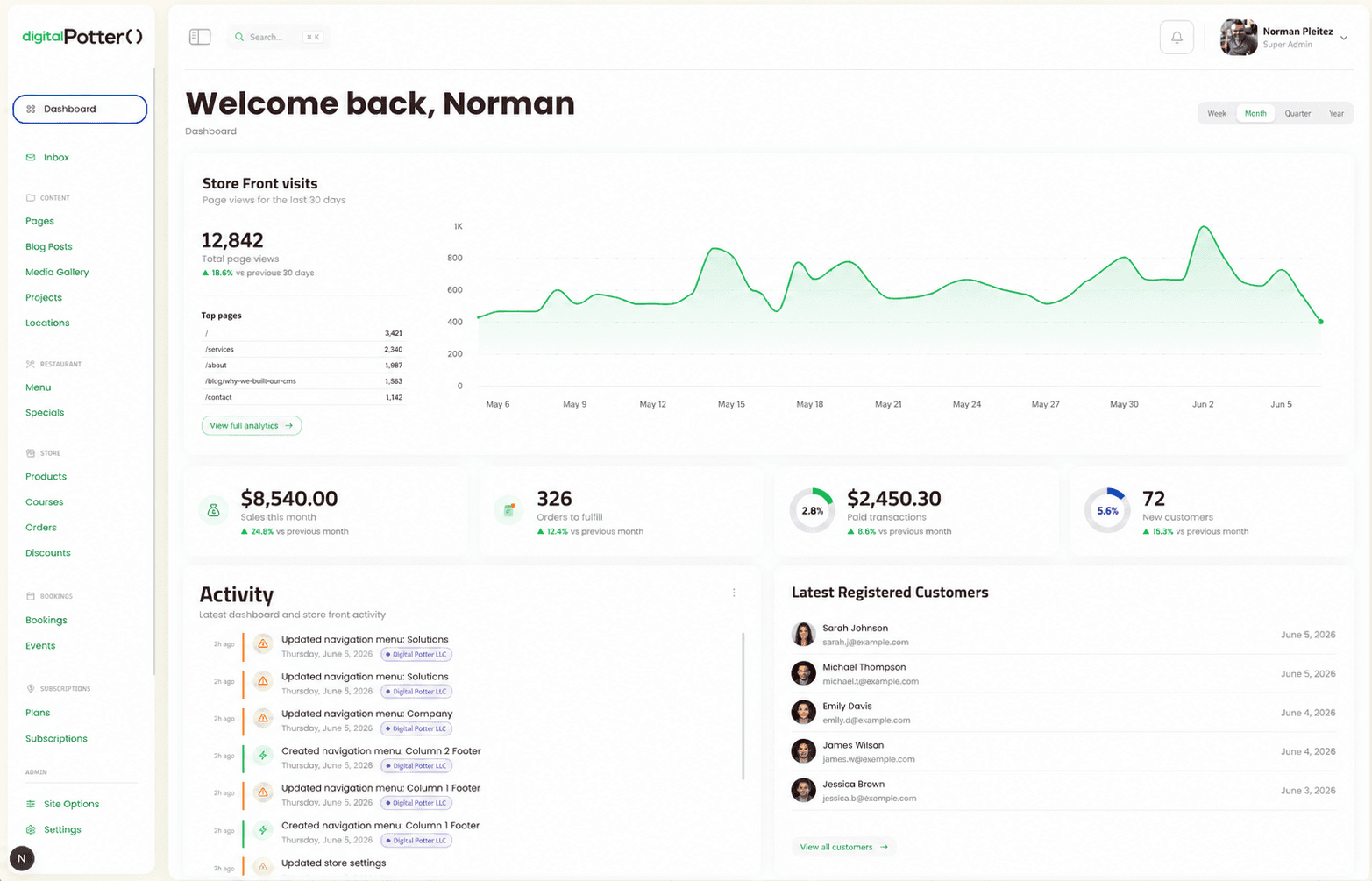
A good content system should make updates feel safe. You should be able to edit pages, add content, publish articles, update menus, adjust basic SEO fields, and keep your site active without being afraid of breaking the design.
That is one of the reasons we built our own CMS, theDavid. We wanted business owners and their teams to have enough control to manage content confidently, while keeping the design system protected.
Control matters. But safe control matters more.
Sign 2: Your Website Is Slower Than Your Competitors
Template builders have to serve many kinds of businesses.
A restaurant, a photographer, a consultant, an online store, a nonprofit, and a booking business may all run on the same general platform. That means the platform often ships a lot of code your site may never use.
At first, you may not notice.
But customers do.
People are impatient online. If your site takes too long to load, many visitors leave before they ever read your headline. On mobile, that problem gets even worse.
Speed affects trust. It affects conversion. It affects SEO. It affects the first impression people have of your business.
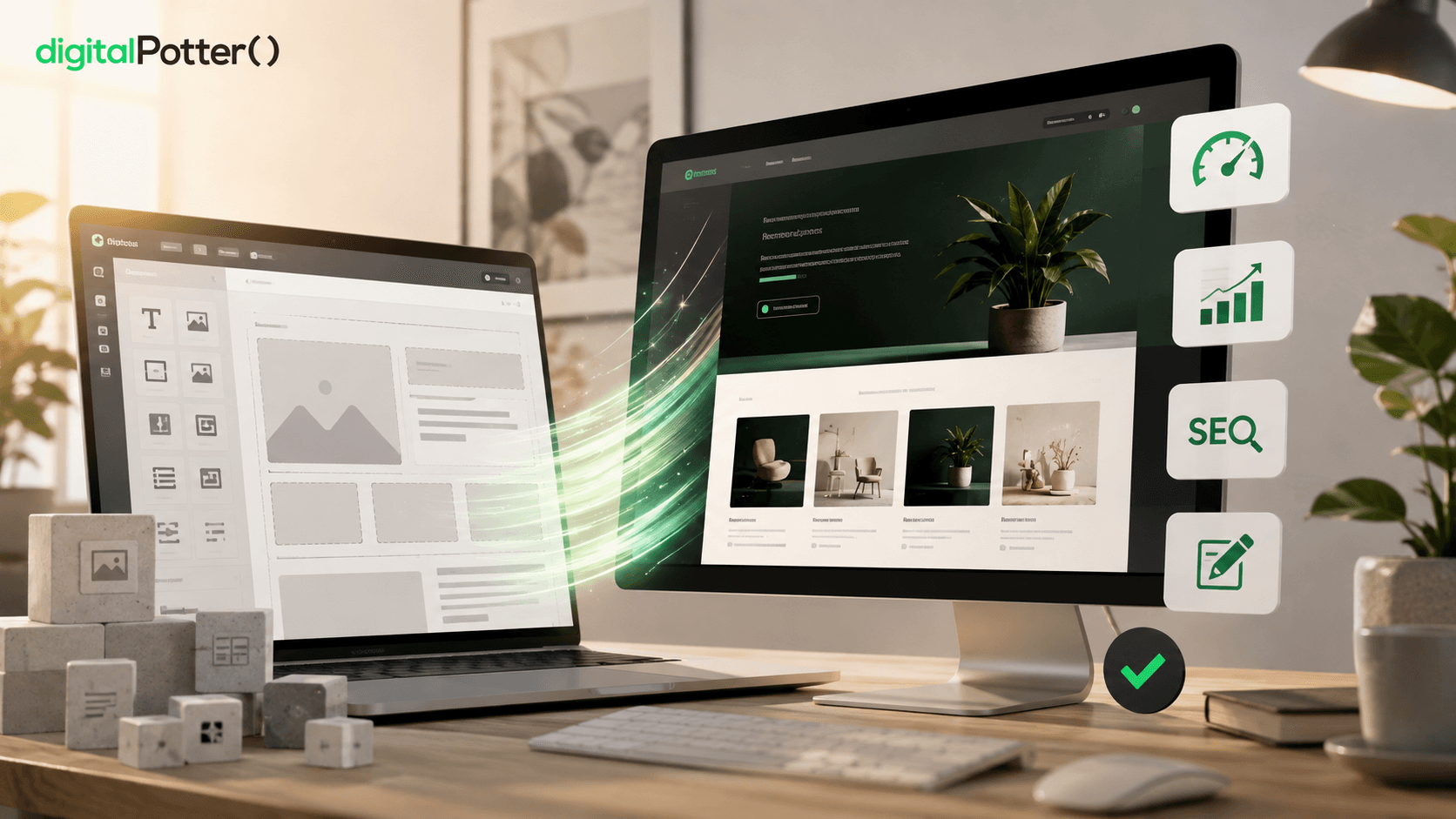
A custom website can be built with only what it needs. No unnecessary template engine. No overloaded theme. No pile of third party widgets fighting for attention. Just a clean frontend, a focused structure, and performance decisions made around your business.
That is one of the biggest differences between a site that was assembled and a site that was engineered.
Sign 3: SEO Advice Keeps Hitting a Wall
At some point, many growing businesses hire an SEO consultant or start taking search visibility seriously.
Then the recommendations arrive.
Improve page speed. Add structured data. Control metadata per page. Clean up heading structure. Fix duplicate content. Improve canonical URLs. Add better internal linking. Optimize images. Improve mobile performance.
Some of those items are content tasks.
Others are platform tasks.
And that is where template builders can become frustrating.
You may know exactly what needs to be done, but the platform does not give you enough access or flexibility to do it properly. The answer becomes, “the platform does not support that,” or “you need another app for that,” or “you can sort of do it, but not cleanly.”
That is the ceiling.
And it usually does not move just because you upgrade to a higher plan.
A serious business website needs SEO control built into the foundation. Page structure, performance, metadata, content hierarchy, URLs, schema, and technical flexibility should not feel like afterthoughts.
They should be part of the architecture.
Sign 4: You Keep Running Into the Feature Wall
A simple website presents your business.
A more mature website starts running parts of your business.
That is where template builders often begin to show their limits.
You may need deposits for bookings. Or a customer portal. Or custom forms that connect to your workflow. Or a product catalog that talks to inventory. Or online ordering. Or subscriptions. Or memberships. Or a private dashboard for clients.
The platform answer is usually an app marketplace.
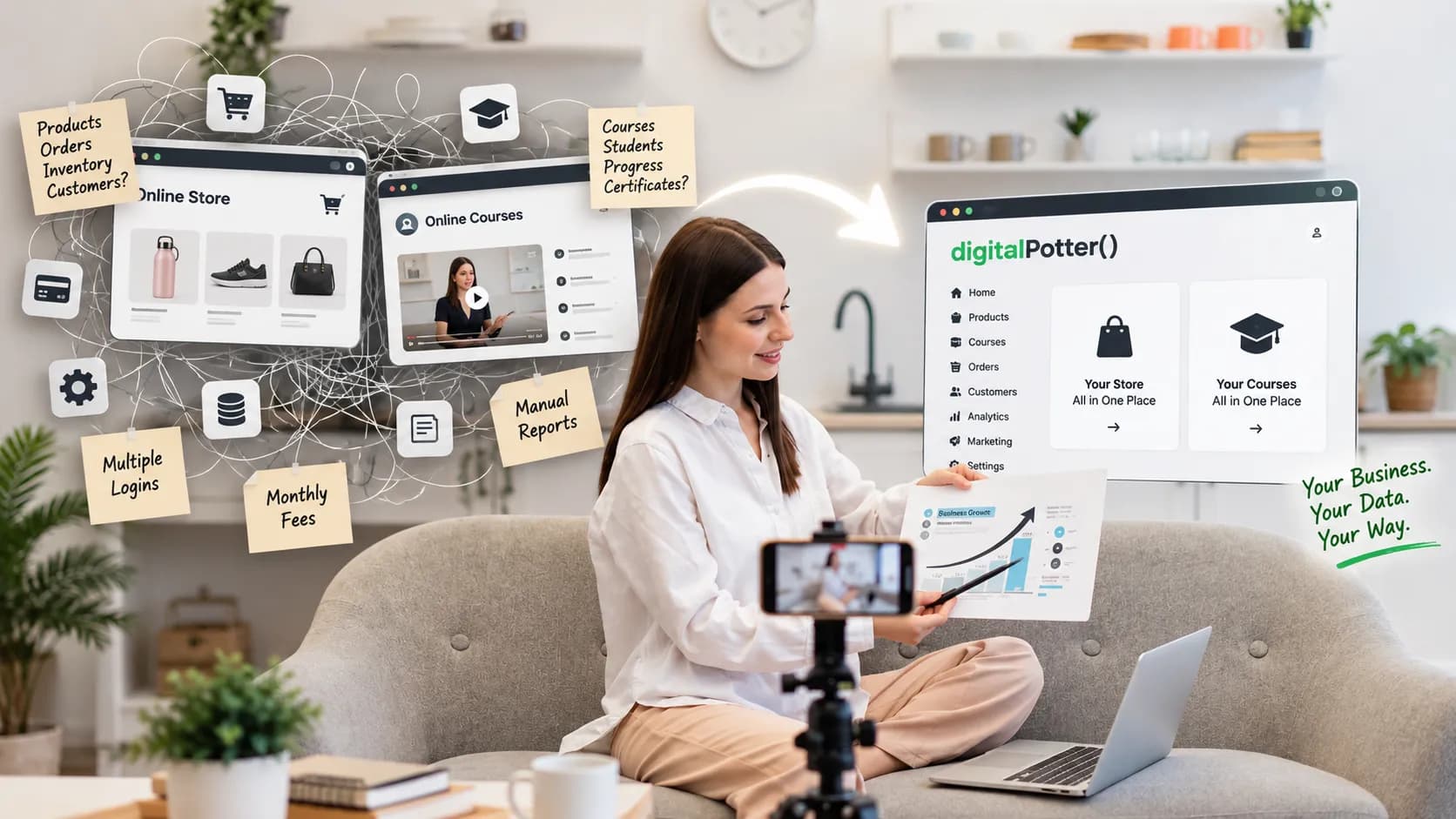
That sounds convenient at first. But each app often brings another monthly fee, another login, another integration, another privacy concern, and another piece of the system that almost does what you need.
Almost is expensive.
It creates workarounds. It creates manual steps. It creates complexity hidden behind a simple interface.
This is where custom development becomes valuable. Not because every business needs a custom application, but because growing businesses eventually need systems that match how they actually operate.
That is why Digital Potter now has two paths.
For businesses that want to launch quickly with AI and still have a real content system behind the site, we built digitalpotter.tech. It helps generate a working website fast, powered by our CMS instead of leaving you trapped inside a generic template.
For businesses that need a fully custom experience, digitalpotter.io remains our studio site, where we design and build custom websites, apps, ecommerce systems, booking platforms, and digital products around the real needs of the business.
Sign 5: Your Website Looks Like a Template
Customers may not always say it out loud.
But they feel it.
A template site often looks familiar because it is familiar. The same hero section. The same cards. The same animations. The same stock photos. The same layout used by thousands of other businesses.
That may be fine when you are starting.
But if your business competes on quality, service, trust, creativity, craftsmanship, or reputation, looking generic can quietly work against you.
Your website should feel like your business.
It should communicate your brand, your standards, your personality, and your value. It should help customers understand why they should choose you instead of the competitor down the street.
Design is not just decoration.
Design is positioning.
A custom website gives your business a stronger visual identity. It gives you flexibility in layout, messaging, content, user experience, and functionality. It lets the site serve the brand instead of forcing the brand to fit the template.
What Switching Actually Involves
Switching away from a template builder usually sounds more intimidating than it really is.
A good rebuild does not mean starting from zero.
Your existing content can often be migrated, including pages, blog posts, images, service descriptions, products, and in some cases customer or order history. The process starts by understanding what needs to stay, what needs to improve, and what no longer serves the business.
From there, the work usually falls into a few clear steps.
First, we audit the current site. We look at content, structure, performance, SEO, design, and the features your business actually uses.
Next, we plan the new structure. This includes pages, navigation, content areas, calls to action, and the CMS setup your team will use after launch.
Then we design the experience around your brand. Not around a marketplace theme. Not around a builder limitation. Around your customers and your business goals.
After that, we build the frontend, connect the CMS, migrate content, test performance, review SEO fundamentals, and prepare the site for launch.
The goal is not just to replace the old website.
The goal is to give your business a stronger digital foundation.
The Best Website Platform Is the One That Fits Your Stage
There is no shame in starting with a template builder.
Many businesses should.
The problem is staying there after your needs have changed.
If your team is afraid to edit the site, if performance is holding you back, if SEO recommendations keep running into platform limits, if every new feature requires another app, or if your website looks too much like everyone else, it may be time to move forward.
That does not always mean a massive rebuild.
Sometimes it means moving to a better CMS. Sometimes it means rebuilding the frontend. Sometimes it means creating a custom system for the parts of your business that matter most.
At Digital Potter, we help businesses choose the right path.
If you want to move fast with AI and still have a real CMS behind your website, visit https://digitalpotter.tech.
If you need a custom website, web app, ecommerce system, booking platform, or advanced digital experience, visit https://digitalpotter.io.
The point is not to make your website more complicated.
The point is to make it more useful, more flexible, more professional, and easier to grow with.
Template builders are a fine place to start.
But your business should not be stuck there forever.